It is every coach and course creator’s worst nightmare. You pour your heart, soul, late nights, and years of hard-won expertise into building a signature coaching framework. You spend thousands on branding, copywriting, and hosting platforms to launch it to the world, thrilling at the initial sales.
And then, a few months later, you get a direct message from a loyal follower containing a screenshot. A former student of yours has just launched their new programme, and it looks suspiciously, heartbreakingly like yours.
The module titles are almost identical. The sequence of the worksheets is exactly the same. They’ve essentially slapped their own pastel branding and logo over your intellectual property (IP) and are actively selling it to their audience as their own original genius. It isn’t just about the potential lost revenue; it feels like a profound violation of trust.
As the online education and coaching space continues to boom, the fear of content theft is rising right alongside it. It is incredibly easy to right-click, save, and duplicate digital assets. So, how do you legally protect coaching content in Australia without putting your business behind a giant, unapproachable legal fortress that scares off genuine clients?
The answer lies in understanding exactly what you legally own, communicating your boundaries clearly, and ensuring your contracts are doing the heavy lifting for you in the background. Let’s break down how to stop the copycats and keep your hard work safe and profitable.
The Hard Truth: Ideas vs. Expressions
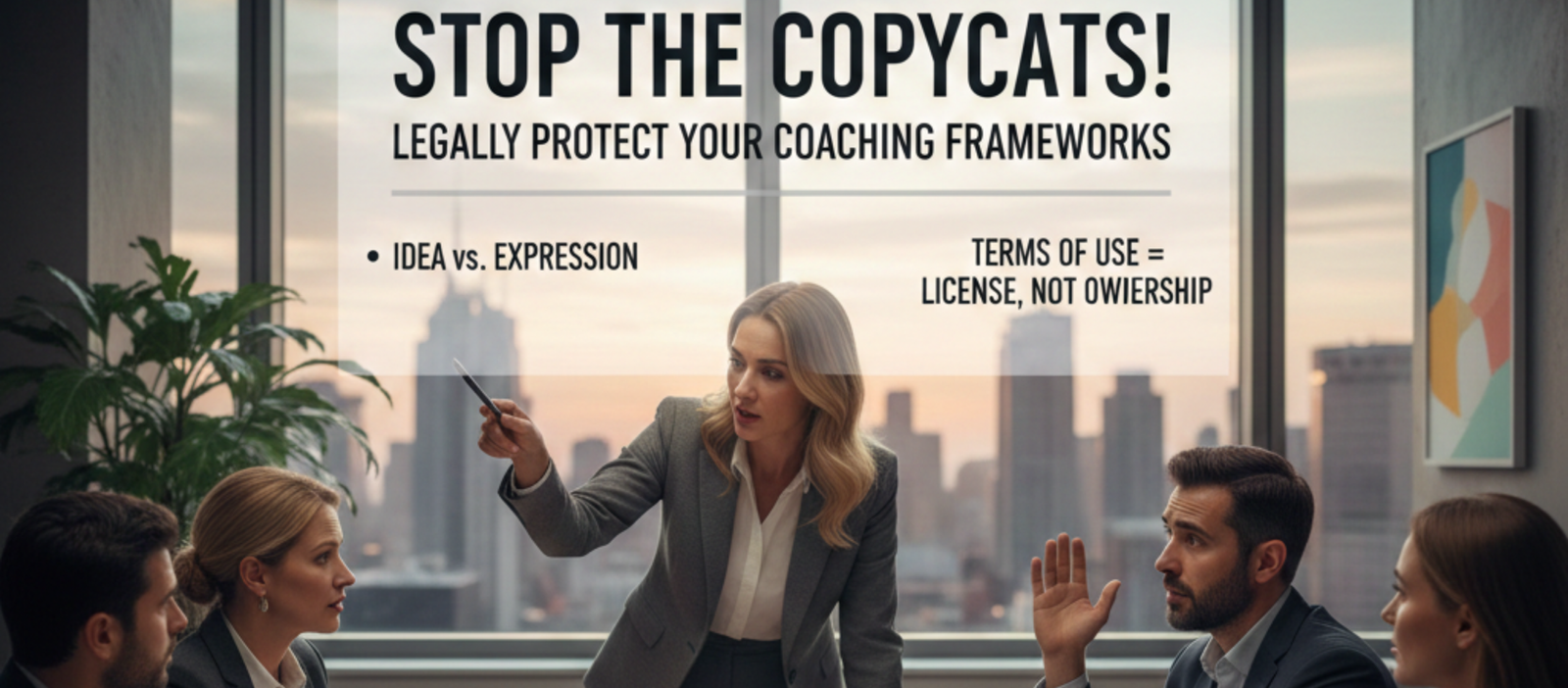
The first thing you need to understand about intellectual property is the fundamental legal difference between an “idea” and an “expression.” This is the exact point where many creative business owners get tripped up and frustrated.
Under Australian law (and internationally), you cannot copyright an idea. If your big, overarching idea is “using daily mindfulness to overcome business procrastination,” you cannot legally stop another business coach from also teaching mindfulness for procrastination. The broad concept itself is out in the ether, free for anyone to use.
However, you can copyright the expression of that idea. While you don’t own the overarching concept, you do own the highly specific, tangible way you have articulated and packaged it. For example, you legally own:
- Your unique, named 5-step framework (e.g., The “Mindful Momentum” Method).
- The exact paragraphs, wording, and layout in your PDF workbooks and slide decks.
- The original audio and video recordings you have produced.
- The proprietary spreadsheets, Canva templates, or Notion boards you provide exclusively to your students.
To successfully protect your coaching content, you need to shift your focus away from trying to hoard a general “idea” and pivot towards fiercely protecting your specific, tangible “expressions.”
The Secret Weapon: You Are Selling a “Licence,” Not Ownership
When an excited new client clicks the “Buy Now” button for your online course or group coaching programme, what are they actually purchasing from a legal standpoint?
If you don’t have crystal-clear legal terms in place at the point of sale, a client might mistakenly assume they are buying your materials outright. Because they paid £1,000 for the course, they might think that gives them the right to do whatever they please with the PDFs and videos, including teaching it to their own clients or reselling it.
This is where your Terms of Use (or Terms and Conditions) become your ultimate shield. Your terms must explicitly state that when a client purchases your programme, they are absolutely not buying ownership of your IP.
Instead, they are buying a licence to use your IP. More specifically, they are usually buying a limited, non-transferable licence for their own personal, non-commercial use.
Think of it like buying a ticket to the cinema. Buying that ticket gives you the legal right to sit in the theatre, eat your popcorn, and watch the film for your own enjoyment. It does not, under any circumstances, give you the right to set up a camera on a tripod, record the film, and sell bootleg copies in the car park. Your online course materials work in the exact same way. They can consume it for their own growth, but they cannot profit from your IP.
Beware the “Train the Trainer” Trap
Many coaches find that their students love their frameworks so much that they want to use them with their own clients. If you want to allow this, you need a specific B2B Commercial Licence or a Certification Agreement. If you only have standard Terms of Use, your students are legally prohibited from using your IP to coach others. Making this distinction clear upfront saves you from messy conflicts later.
How to Bulletproof Your Coaching Materials
So, how do you put this protective shield into practice? Here are the actionable, practical steps you need to take before you launch your next offer:
1. Ironclad Terms of Use (and Checkboxes)
At the point of checkout, your clients must actively agree to a robust set of Terms of Use. Do not hide these at the very bottom of your website footer. Use a “clickwrap” agreement, this means they physically have to tick a box that says “I have read and agree to the Terms of Use” before their payment can be processed. This document needs a dedicated Intellectual Property clause that clearly states your materials are protected by copyright, defines the scope of their licence, and explicitly forbids reproduction, distribution, or the creation of derivative works.
2. The Power of the Copyright Symbol (©)
It sounds simple, but it is incredibly effective. Place the copyright symbol, the year of creation, and your legal business name (e.g., © 2026 Law X Design. All Rights Reserved.) in the footer of every single PDF, worksheet, slide deck, and video you produce. You might even consider light watermarking on highly valuable proprietary templates. This acts as a clear visual deterrent to opportunistic copycats who might later try to claim they “didn’t know” the work was legally protected.
3. Consider NDAs for High-Ticket Masterminds
If you are running an intimate, high-ticket coaching container where you share highly sensitive, behind-the-scenes IP, financial data, or proprietary business strategies that haven’t been released to the public, standard terms might not be enough. In these high-stakes scenarios, having participants sign a Non-Disclosure Agreement (NDA) or a strict confidentiality clause as part of their 1:1 coaching agreement adds a stringent, legally enforceable layer of protection.
4. Know How to Enforce Your Boundaries
What happens if you do everything right, and someone still copies you? You don’t immediately have to go to court. Your first step is usually issuing a Cease and Desist letter. This is a formal legal document sent to the copycat, outlining exactly how they have infringed on your copyright and demanding they take the stolen content down immediately. In the vast majority of cases, a well-drafted Cease and Desist letter from a legal professional is enough to scare off the offender and resolve the issue quickly.
Empower Your Business Today
You’ve worked far too hard on your signature programmes to let someone else effortlessly profit from them. Protecting your IP isn’t about operating from a place of fear or paranoia; it’s about operating like a Legally Empowered Coach who understands how to protect coaching content in Australia from online course copycats.
At Law X Design, we make intellectual property protection for course creators simple, accessible, and commercial. As a dedicated small business law provider for coaches, we know you don’t need confusing legal jargon or intimidating hourly rates, you just need the right legal foundations and contracts to stop content theft.
Ready to lock down your IP and legally protect your coaching business before your next big launch?
Visit our Template Shop to grab our industry-specific legal templates for Australian coaches, including our comprehensive Website T&Cs, Online Coaching or Website T&Cs, Digital Products. These agreements are specifically designed to secure your course materials, define your user licences, and protect your brand reputation.
Need a more tailored approach to your online course law strategy or need help dealing with an active copycat? Book Your Free Consultation to chat about our fixed-fee commercial legal services and custom IP protection today.